
High expectations for EERIE’s final phase
EERIE Project members and partners gathered in person on March 9-13 at the Barcelona Supercomputing Center (BSC) premises for the 2026 General Assembly, a meeting that paved the way for …
EERIE Project members and partners gathered in person on March 9-13 at the Barcelona Supercomputing Center (BSC) premises for the 2026 General Assembly, a meeting that paved the way for …
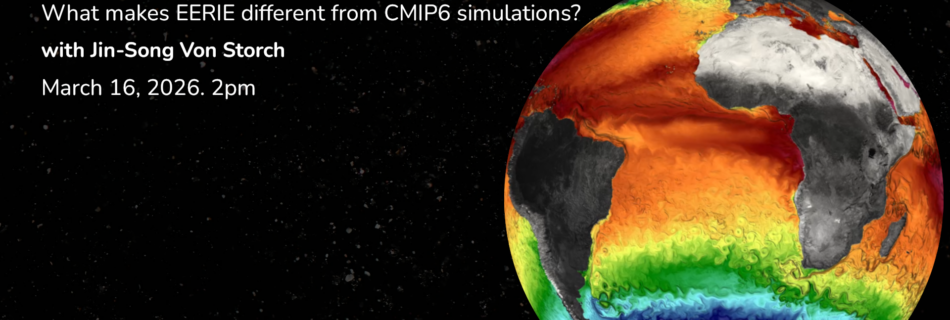
In our March 2026 Storms, Eddies and Science webinar MPI-M’s Jin-Song von Storch explores in detail the complex answer to one single question – what makes EERIE simulations different from …
Read more “What makes EERIE different from CMIP6 simulations?”
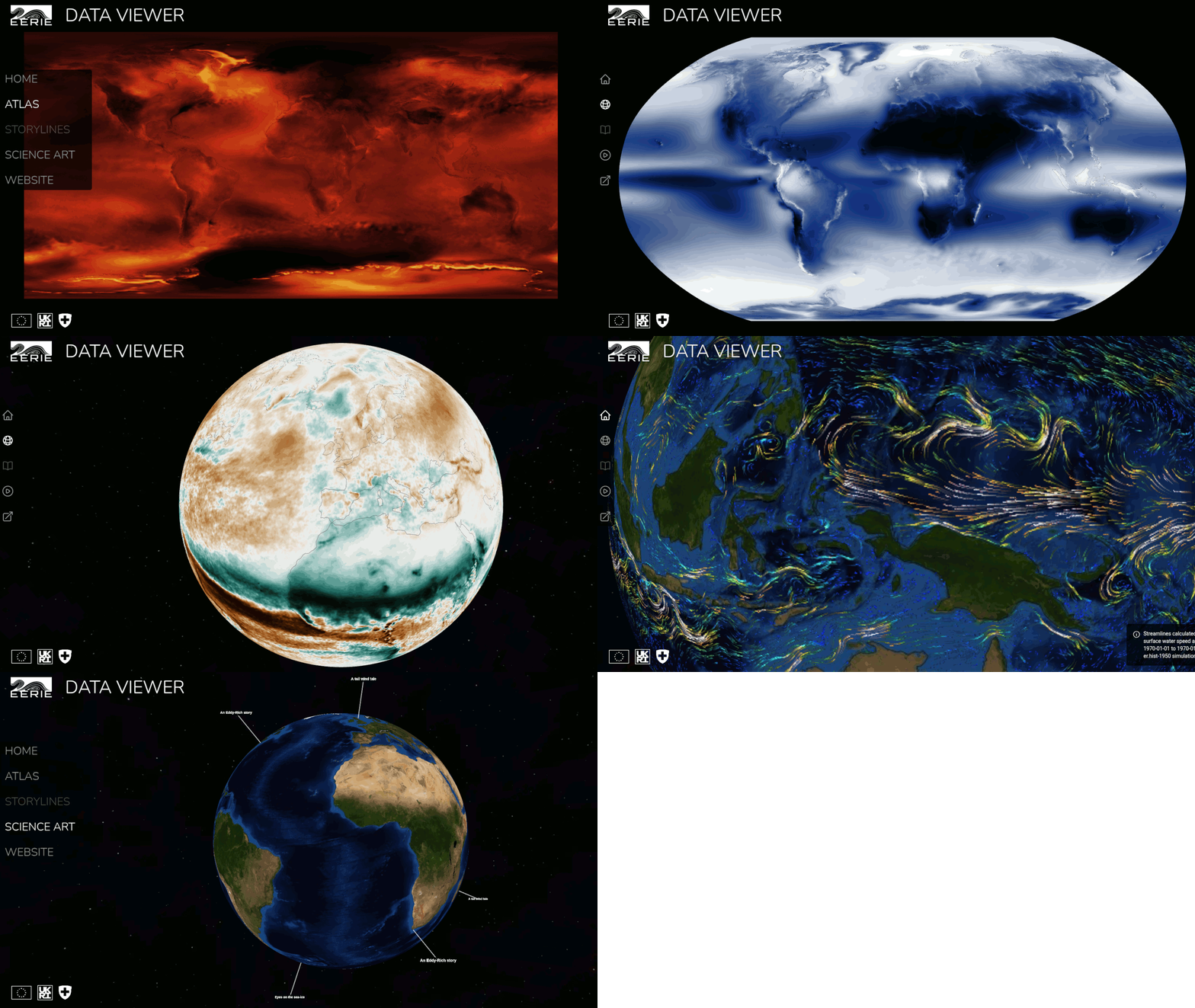
The first version of the EERIE Data Viewer has been released today. You can explore it by clicking here or on the Data Viewer tab on the top menu of …
Hosted by EERIE co-Coordinator Malcolm Roberts, our January 2026 Storms, Eddies and Science webinar features Met Office researcher Dave Storkey presenting his work on ‘Using sequence acceleration to speed up …
Read more “Spin up acceleration in NEMO + State of EERIE Project Phase 2 Simulations”
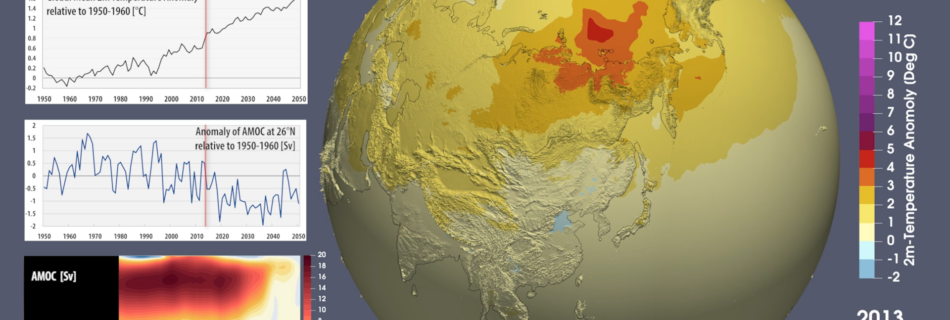
In the past few years, climate modeling has taken a remarkable leap forward, especially with the development of km-scale Earth system models (ESMs). These models operate at spatial resolutions as …
Read more “Taming the Petabytes: Making km-scale climate data usable”
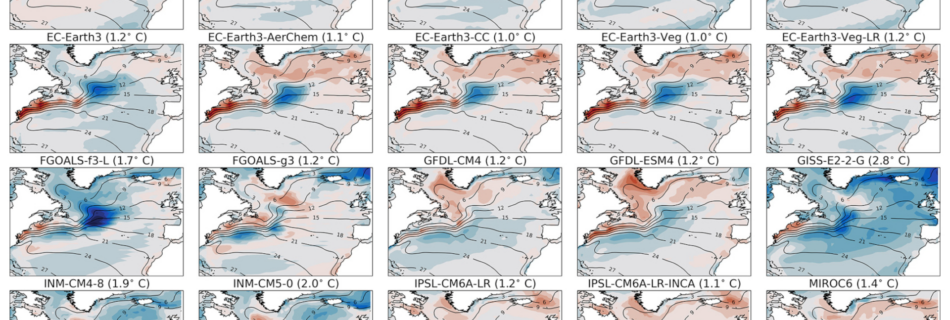
Ocean mesoscale structures, which are parameterized in models with standard resolutions on the order of 1° or coarser, have an impact at larger scales, affecting the ocean mean state and …
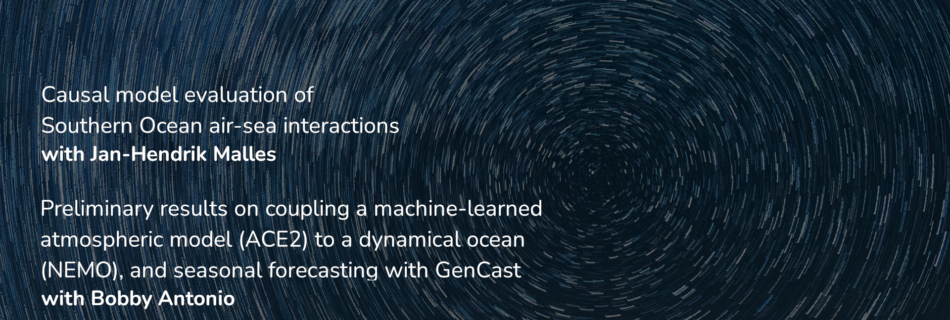
EERIE project scientists Jan-Hendrik Malles and Bobby Antonio present their research on Causal model evaluation of Southern Ocean air-sea interactions and Preliminary results on coupling a machine-learned atmospheric model (ACE2) …
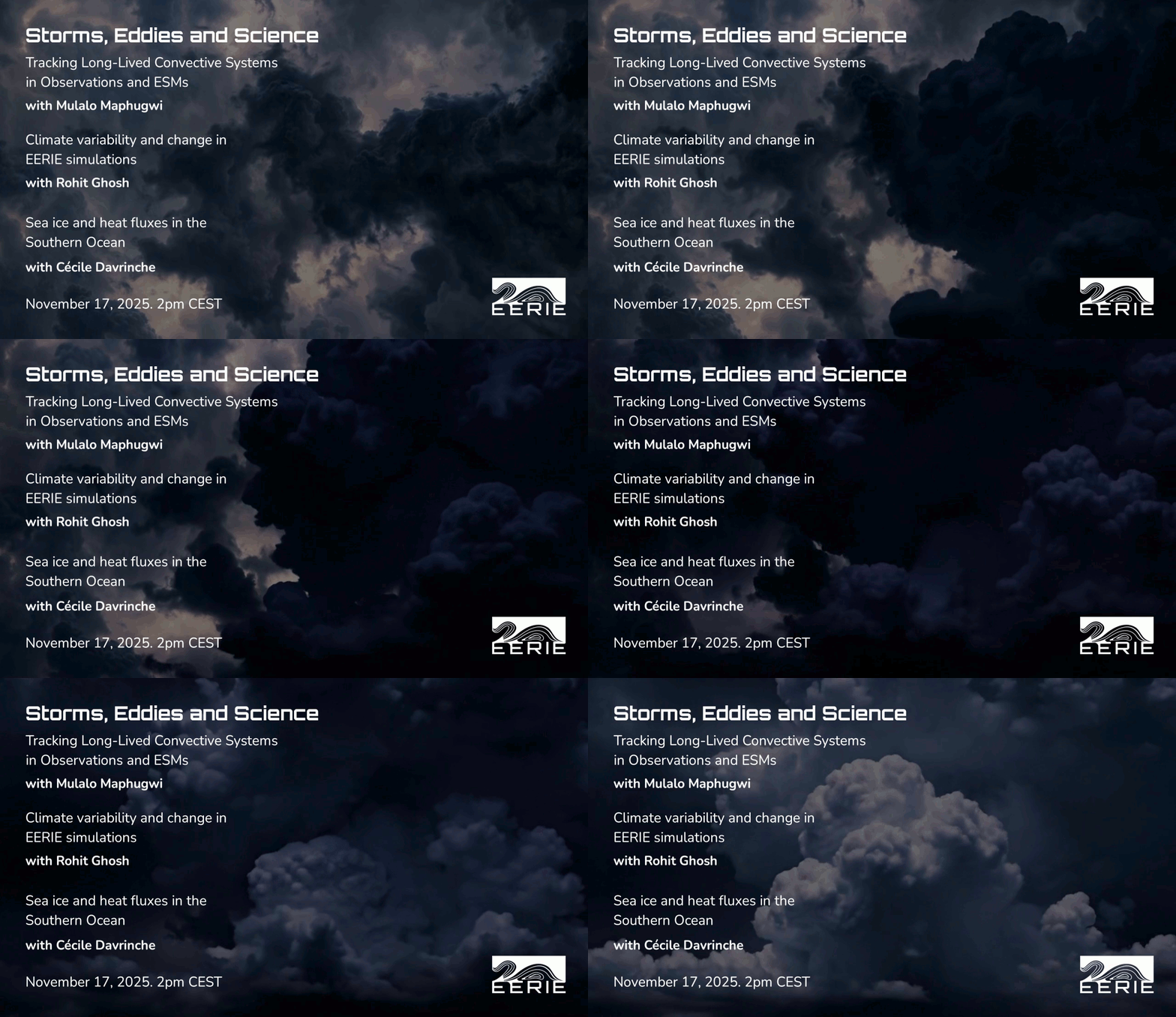
EERIE project scientists Mulalo Maphugwi (University of Cape Town), Rohit Ghosh (AWI) and Cécile Davrinche (UC Louvain) present their research on Tracking Long-Lived Convective Systems in Observations and Earth System …
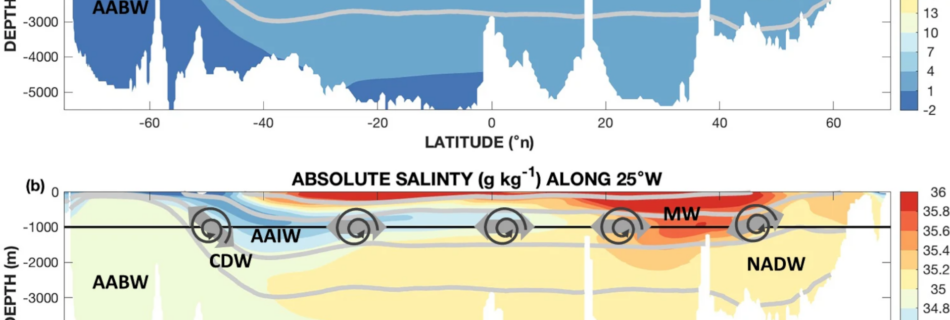
The ocean, because of its ability to store heat and as the biggest mediator of water exchanges on Earth, modulates the climate from years to centuries. By combining Water Mass …
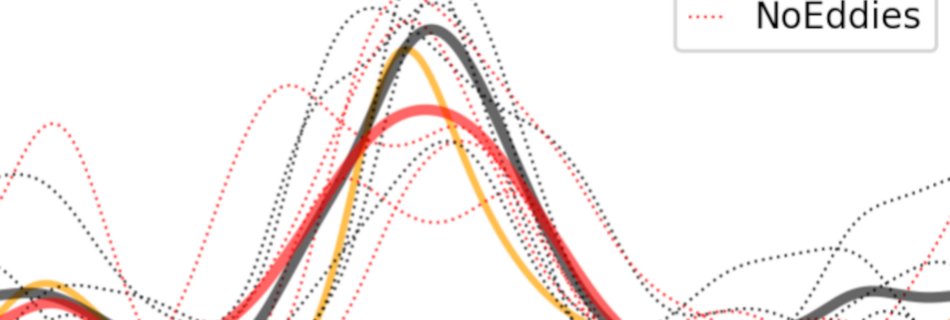
This study evaluates the performance of high-resolution (grid sizes of 9–28 km for the atmosphere; 5–13 km for the ocean) global simulations from the EERIE project in representing the persistence of the …