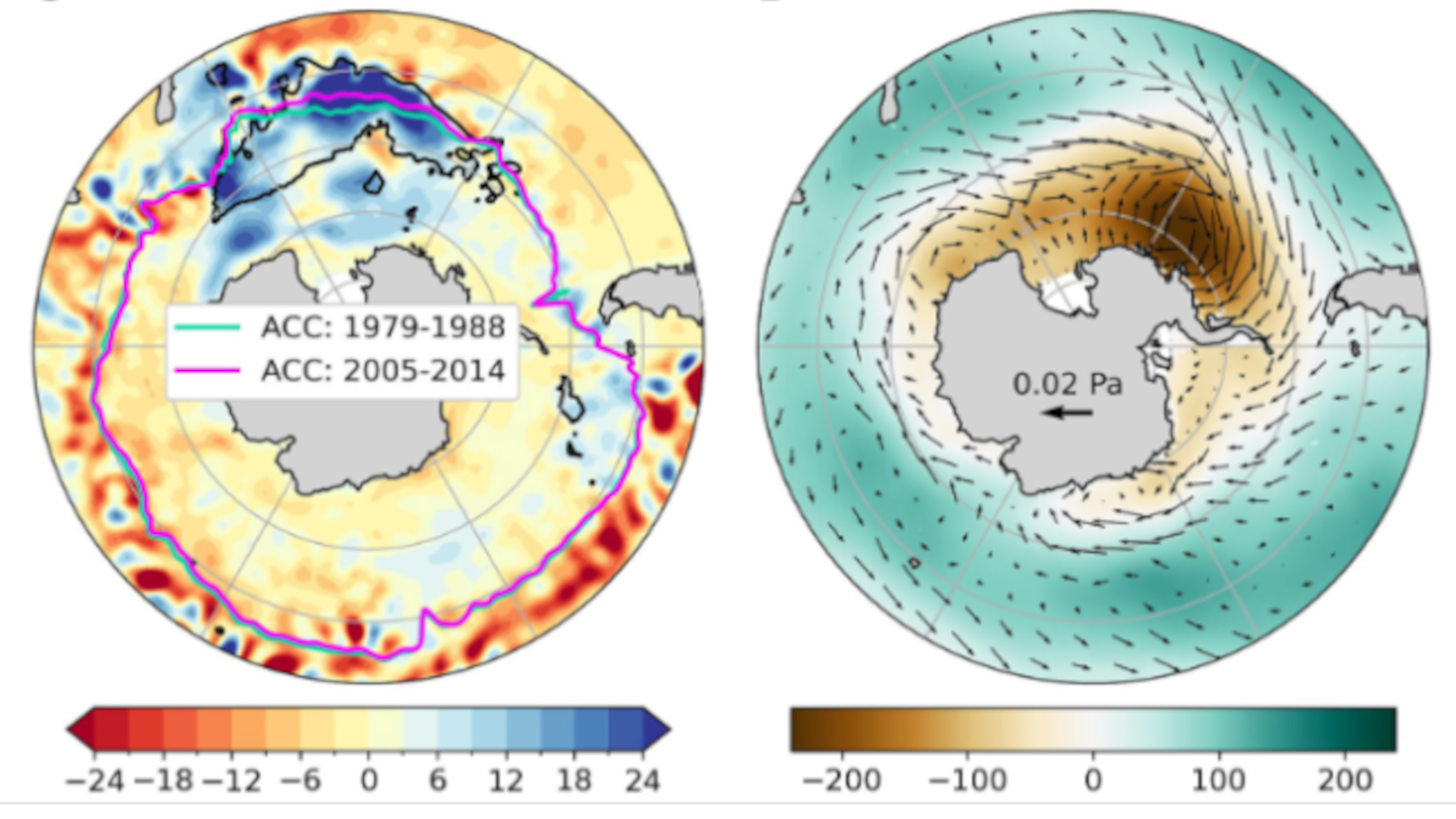
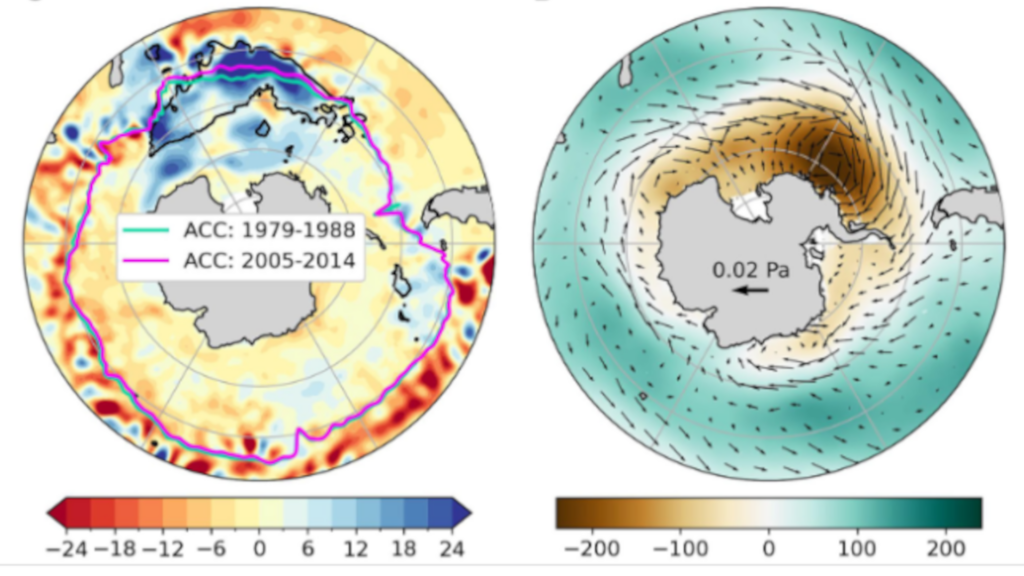
The spatial pattern of sea surface temperature (SST) change in the tropical Pacific plays a central role in shaping global climate through its influence on atmospheric circulation, rainfall, and extreme weather. Accurately simulating this pattern is critical for reliable near-term climate projections, yet persistent discrepancies between models and observations remain. While global warming is unequivocal, satellite-era observations reveal pronounced cooling in the southeastern tropical Pacific and Southern Ocean, contrary to the warming simulated by most CMIP models. These discrepancies raise concerns about the reliability of current models in projecting near-term regional climate change. Here, we present the historical simulation with the ICON coupled model at a 5 km ocean and 10 km atmosphere grid-spacing. ICON successfully reproduces the observed SST trends, including cooling in both the Southern Ocean and the southeastern tropical Pacific. Its fidelity is enabled by the direct representation of eddy heat transport across the Antarctic Circumpolar fronts and realistic stratocumulus cloud feedbacks in the subtropical southeast Pacific. These findings highlight the importance of fine spatial resolution in capturing the mechanisms of heat uptake in the eddy-rich Southern Ocean. Our results suggest a pathway for resolving long-standing biases in historical simulations and improving confidence in near-term climate projections.