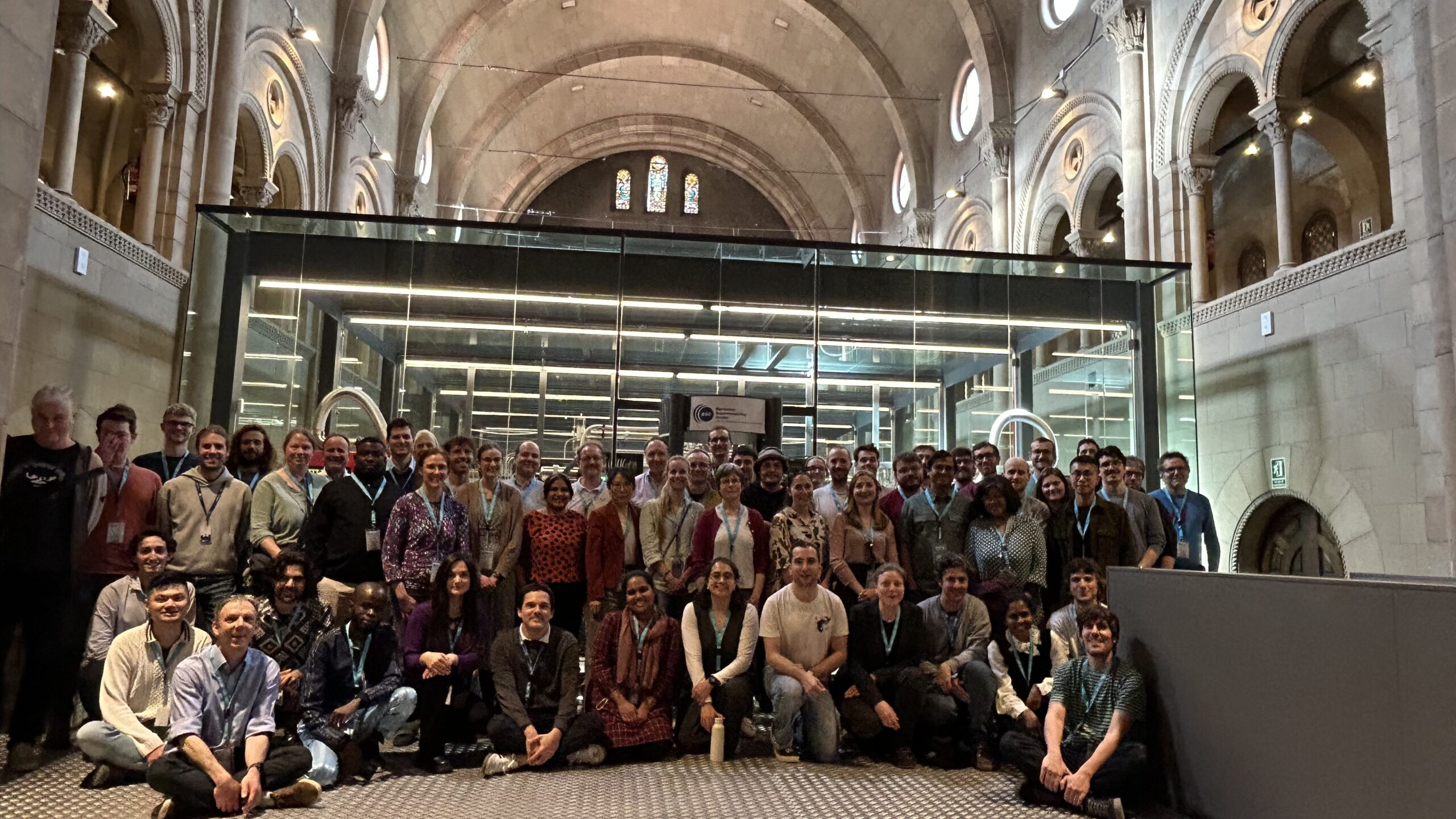
EERIE Project members and partners gathered in person on March 9-13 at the Barcelona Supercomputing Center (BSC) premises for the 2026 General Assembly, a meeting that paved the way for the final phase of the project thanks to enhanced collaboration efforts.
Throughout the week, EERIE participants engaged in stimulating discussions, debated ideas on the best ways forward and identified some key aspects that are already part of the project’s legacy.
Storylines - A GA buzzword
The week started with a Storylines workshop – well attended and with interesting, challenging input from stakeholders from academia and regional weather agencies among other sectors. The need to translate scientific speech into more specific, down-to-earth words became clear, as well as not losing sight of the cost, as many a speaker insisted politicians would argue.
Storylines centered much of the debate in the plenary as well, and featured several meetings in the sidelines, where topics and development was discussed. A potential AMOC collapse, convective storms and marine heatwaves were just some of the topics considered. Some of them are soon to be further developed and included in our Data Viewer.
The Kyoto Connection
Held in Kyoto on the exact same dates as the EERIE General Assembly, the CMIP Community Workshop 2026 also made it into the agenda for obvious reasons. From the BSC side, our colleague Francisco Doblas-Reyes participated in the workshop with a presentation on equitable climate projections for small island climates, while one of the members of the EERIE Coordination Team, Thomas Jung (AWI), highlighted innovations and results of the EERIE Project. Two of them are already up and running – namely the EERIE.cloud (which saves users the hustle of having to download large datasets thus increasing efficiency; Read our story on it here) and the Data Viewer, allowing users to easily visualise key data from the project and more, and which is soon to be expanded.
Insights from Kilometer-Scale Earth-System Models
The meeting also provided an opportunity for those external to the project to get a better idea of what’s been achieved so far thanks to increasing resolution in earth-system models. The public lecture, entitled ‘New Views of Climate Change – Insights from Kilometer-Scale Earth-System Models’ featured EERIE scientists Thomas Jung (AWI), Anne Marie Treguier (CNRS) and Ross Blamey (UCT) and can be watched online below:
Exceeding expectations
The general vibe of the meeting was very positive, with early career scientists being particularly appreciative of the opportunities given by an in-person meeting. We are gradually achieving our project goals and even being rewarded with some positive surprises. “I think the quality of our Phase 1 simulations exceeded our original expectations”, said EERIE Coordination Team member Thomas Jung. “Not everything is perfect – we know for example that especially in polar regions there are certain model issues that need to be overcome, but overall it can be said that the quality of the models and the simulations is better than anticipated”, he added.
The General Assembly plenary was held March 9-13 at the Big Blue Whale room at the BSC, right by the Mare Nostrum 5 supercomputer and just a few steps away from the chapel, where our hosts keep a quantum computer – and where we had our group photo taken!