This study evaluates the performance of high-resolution (grid sizes of 9–28 km for the atmosphere; 5–13 km for the ocean) global simulations from the EERIE project in representing the persistence of the Southern Annular Mode (SAM), a leading mode of Southern Hemisphere climate variability. Using the decorrelation timescale of the SAM index (τ), we compare EERIE simulations with CMIP6 models and ERA5 reanalysis.
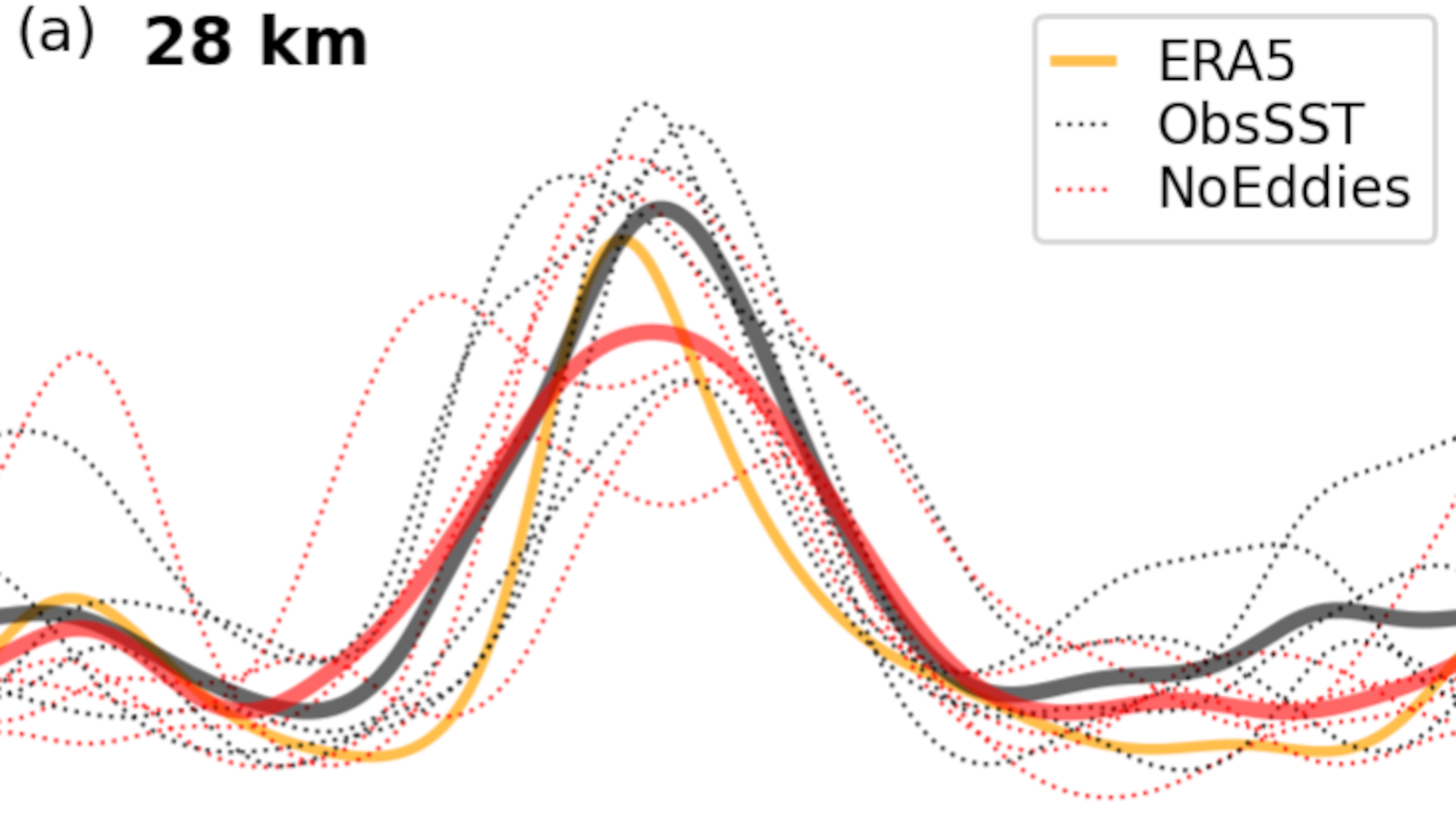
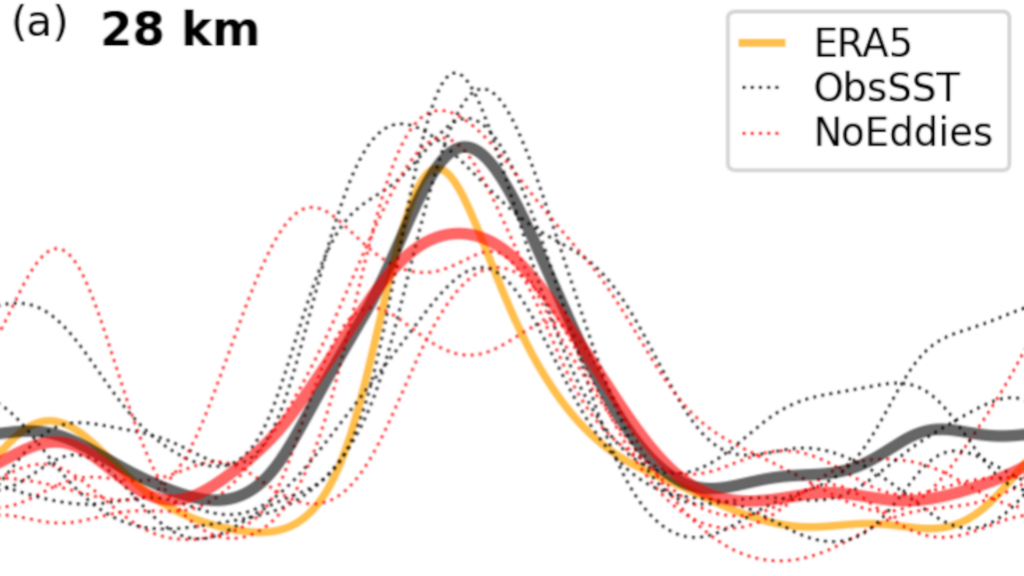
EERIE simulations reduce long-standing biases in SAM persistence, especially in early summer, with τ values of 9–20 d compared to CMIP6's 9–32 d and ERA5's 11 d. This improvement correlates with a more accurate climatological jet latitude (λ0). EERIE atmosphere-only AMIP runs outperform the coupled simulations in both τ and λ0, showing smaller biases and ranges of variability, underscoring the critical role of sea surface temperature (SST) representation in shaping atmospheric circulation. In these AMIP experiments, the atmospheric eddy feedback strength, combined with the damping timescale estimated via friction, correlates more strongly with τ than λ0. We speculate that the well-captured jet position (biases < 1° relative to ERA5), due to prescribed SSTs, limits λ0's explanatory power for τ differences, allowing other processes to dominate. Using a finer model grid (9 km vs. 28 km) of the same AMIP model reduces τ, though the mechanism remains unclear. Finally, motivated by the importance of oceanic eddies in the Southern Ocean, we conducted sensitivity experiments that filter transient mesoscale features from the SST boundary conditions. The results suggest that oceanic eddies may enhance summertime SAM persistence (by ∼ 2 d), though this signal is not statistically significant and is absent in the single 9 km run, pointing to a subtle role of mesoscale ocean-atmosphere interaction that remains to be explored.