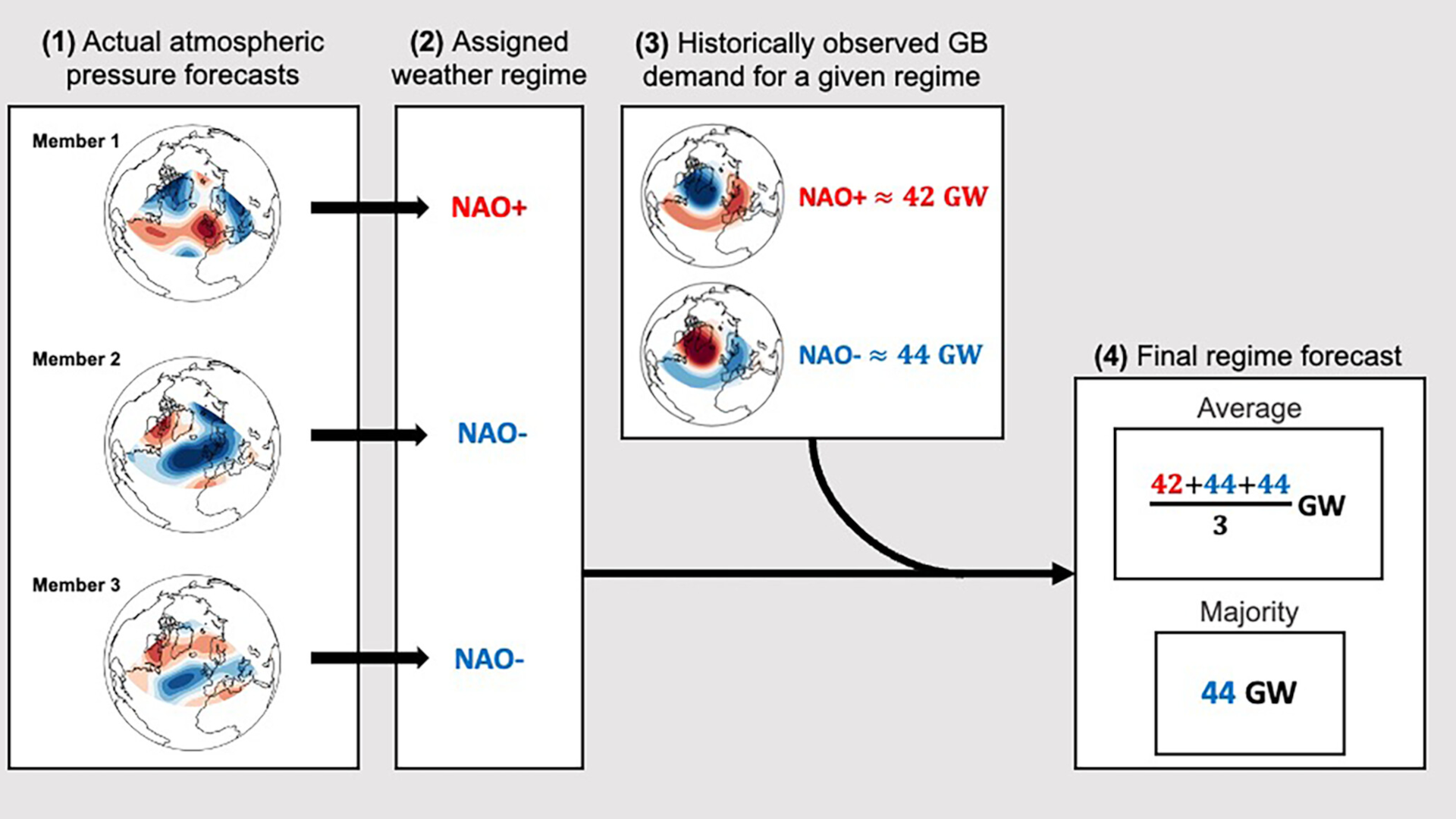
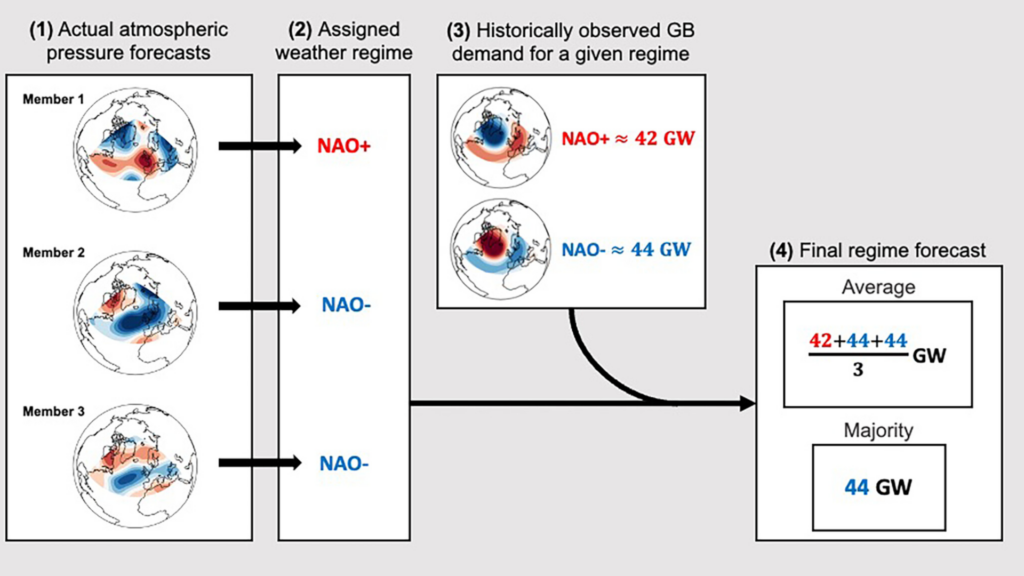
Weather regimes and weather patterns, here jointly referred to as circulation types, are used to generate forecasts for a variety of applications, such as energy demand and flood risk. However, there are usually many different choices available for precisely which circulation types to use. Ideally, one would like to use circulation types that are both highly informative for the application and also highly predictable, but in practice, there is often a tradeoff between informativity and predictability. We present a simple, general framework for how to construct a circulation type forecast that optimally balances these factors by segueing between different choices of circulation types at different lead times based on information-theoretic considerations. As an example, we apply this framework to the case of forecasting energy demand in Great British winters. We compare a set of 30 weather patterns produced by the UK Met Office with the much simpler two-state framework consisting of a positive and negative North Atlantic Oscillation (NAO) regime and show how to optimally combine the two across a winter season.