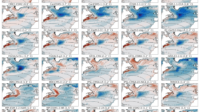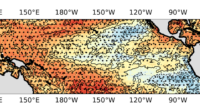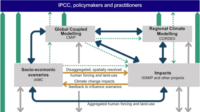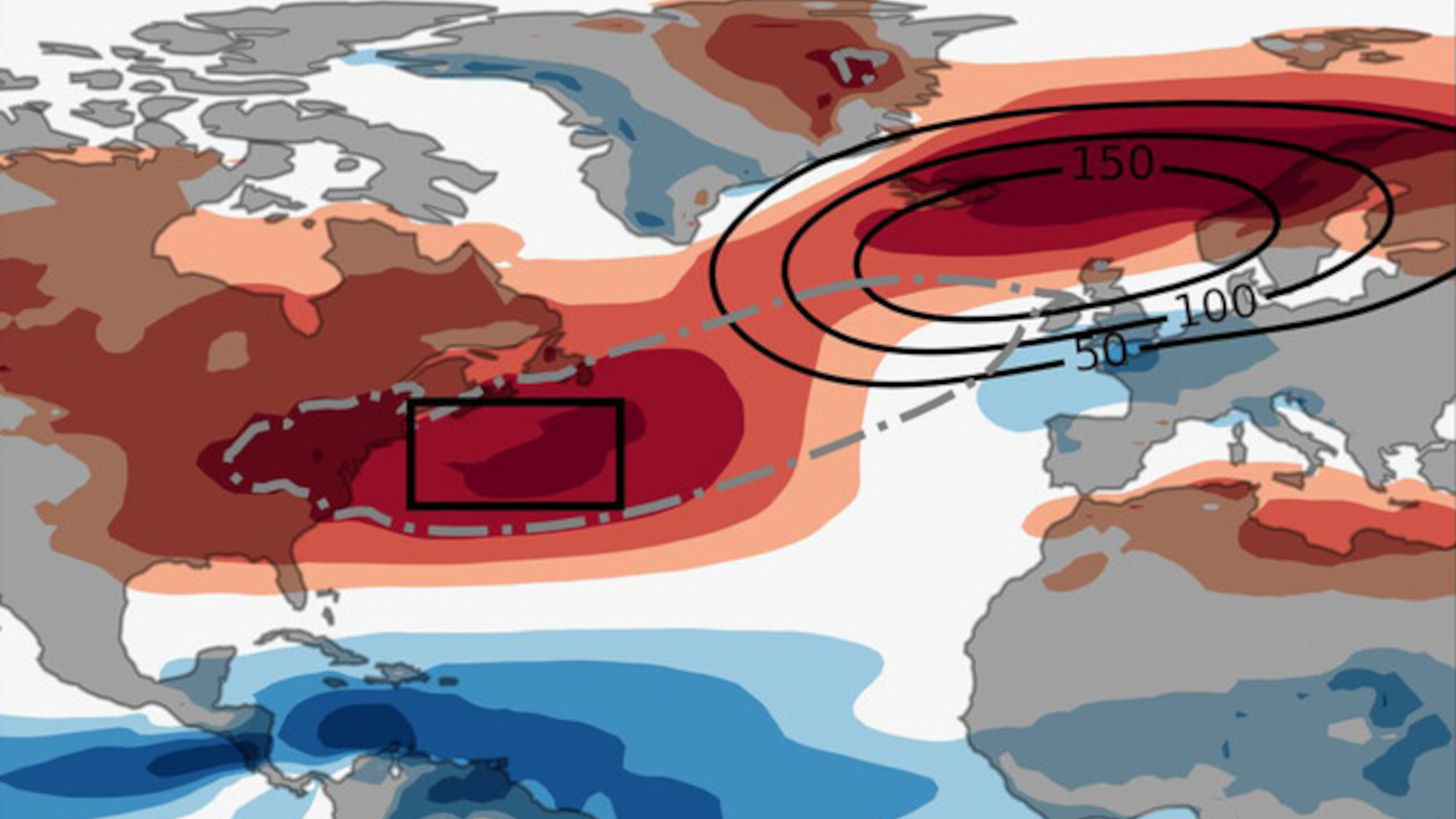
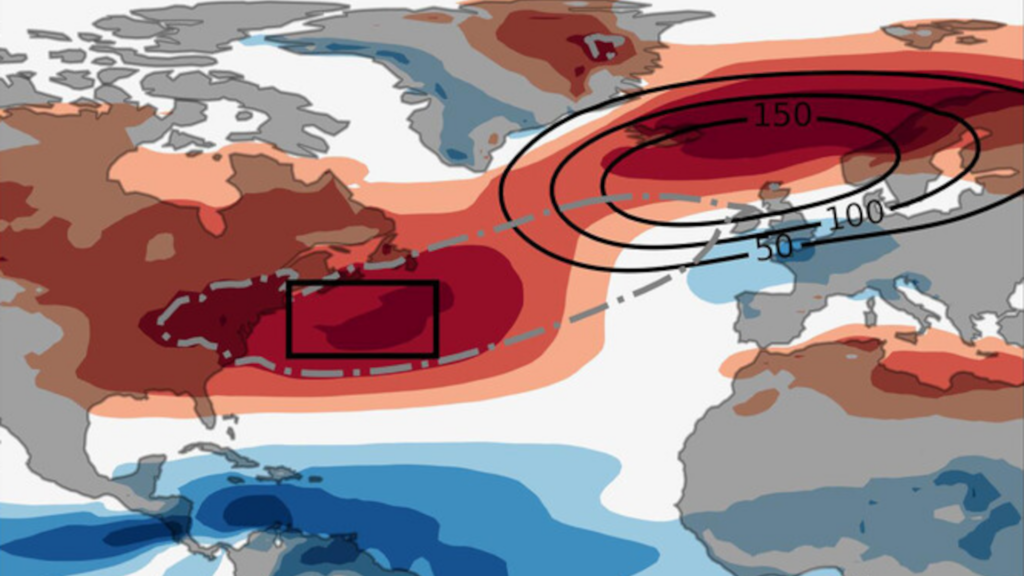
Past studies show that coupled model biases in European blocking and North Atlantic eddy-driven jet variability decrease as one increases the horizontal resolution in the atmospheric and oceanic model components, but it remains unclear if atmospheric or oceanic resolution plays a greater role and why. Here, following recent work by Schemm et al., we leverage a large multimodel ensemble to show that a coupled model’s ability to simulate extreme Gulf Stream precipitation is tightly linked to its simulated frequency of European blocking and northern jet excursions. Furthermore, the reduced biases in blocking and jet variability are consistent with better resolved precipitation extrema in high-resolution models. The analysis supports a hypothesis that models which simulate more extreme precipitation can generate more strongly poleward-propagating cyclones and more intense anticyclonic anomalies due to the stronger latent heat release occurring during extreme events. By contrast, typical North Atlantic SST biases are found to share only a weak or negligible relationship with blocking and jet biases. Finally, while previous studies have used a comparison between coupled models and models run with prescribed SSTs to argue for the role of ocean resolution, we emphasize here that models run with prescribed SSTs experience greatly reduced precipitation extremes due to their excessive thermal damping, making it unclear if such a comparison is meaningful. Instead, we speculate that most of the reduction in coupled model biases may actually be due to increased atmospheric resolution leading to better resolved convection.